
Most companies think data modernization is an IT expense. In reality, it’s one of the fastest ways to reduce operational costs, eliminate inefficiencies, and make better business decisions.
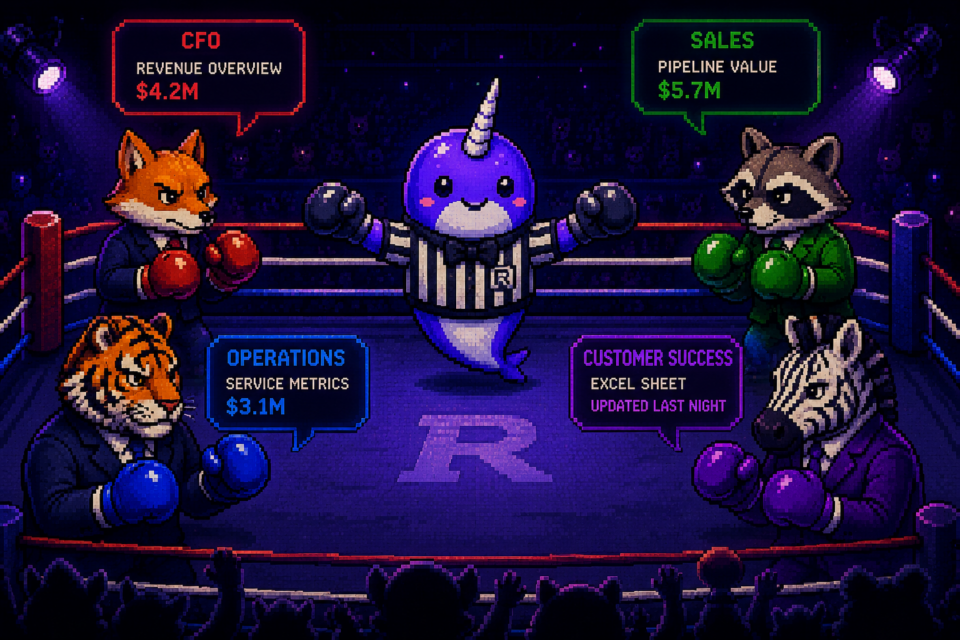
Walk into almost any leadership meeting and you’ll see the same pattern. The CFO has one version of the numbers. Sales has another. Operations has its own dashboard, while Customer Success arrives with a spreadsheet someone updated the night before. Before anyone talks about growth, profitability, or customer retention, the room spends twenty minutes answering a surprisingly simple question: “Which numbers are correct?”
It’s easy to dismiss moments like these as minor inconveniences. They’re anything but. Every hour spent reconciling reports, every manual export from one system to another, every meeting delayed because the data doesn’t line up carries a cost.
The frustrating part is that these costs rarely appear on a financial statement. There isn’t a budget line called “time spent searching for information” or “decisions delayed because systems don’t talk to each other.” Yet those costs accumulate every single day.
According to McKinsey, organizations often underestimate how much they spend managing fragmented data because those costs are spread across departments. Reporting, governance, architecture, third-party data, and manual processes all sit in different budgets, making the true cost almost invisible. Their research also found that companies can recover up to 35 percent of current data-related spending simply by improving how data is managed and shared across the business.
That should change the conversation. Data modernization isn’t just about replacing legacy technology or building better dashboards. It’s about removing hidden costs that quietly slow the business down. The companies seeing the strongest returns from Business Intelligence aren’t necessarily collecting more data than everyone else. They’re making better use of the data they already have.
Here are ten hidden costs many organizations don’t realize they’re paying.
1. Your Highest-paid Employees Spend Too Much Time Looking for Information
Few companies hire experienced managers so they can copy data between spreadsheets. Yet that’s exactly what happens. A department head needs this month’s profitability report. Finance exports numbers from QuickBooks. Operations downloads service metrics from HaloPSA. Sales checks Salesforce. Someone combines everything in Excel before the meeting starts.
The report eventually gets built. The opportunity cost is harder to see. McKinsey has highlighted that knowledge workers lose a significant portion of their productivity simply navigating information spread across different systems instead of acting on it. When experienced employees spend their mornings collecting data instead of interpreting it, the business pays executive salaries for administrative work.
Modern BI platforms eliminate much of that manual effort by connecting systems into a single analytical environment. Instead of gathering information, leaders can focus on what the information actually means.
2. Manual Reporting Quietly Becomes One of Your Most Expensive Processes
Most organizations don’t think of reporting as expensive because no one receives an invoice for it. But consider how many people touch a typical monthly report. Someone exports the data. Someone validates it. Someone formats charts. Someone checks formulas. Someone presents it. Then the entire process repeats next month.
Multiply that across finance, operations, sales, marketing, customer support, and executive reporting. Suddenly, dozens (sometimes hundreds) of hours disappear every month doing work that software should already be handling.
McKinsey estimates that 30 to 40 percent of business reports often deliver little or no value, either because they’re duplicated, outdated, or rarely used. Organizations that redesigned and automated reporting significantly reduced both reporting costs and manual effort.
The goal isn’t simply producing reports faster. It’s allowing people to spend more time acting on insights instead of producing them.
3. Poor Data Quality Creates Work That Shouldn’t Exist
Every organization has what Harvard Business Review calls a hidden “data factory.” It isn’t an official department. It’s the collection of employees constantly correcting customer records, fixing duplicate entries, validating invoices, updating inconsistent product names, or reconciling information across different systems. None of that work creates value. It simply repairs problems that shouldn’t exist in the first place.
Thomas Redman, writing for Harvard Business Review, argues that most organizations invest heavily in cleaning bad data after it enters the business instead of preventing poor-quality data at its source. That reactive approach is both expensive and difficult to scale.
A modern BI platform doesn’t replace good governance, but it makes inconsistencies visible much earlier. When information flows through connected systems instead of isolated silos, identifying data quality issues becomes considerably easier.
4. Slow Decisions Often Cost More Than Bad Decisions
Every business has experienced it. A customer begins showing early warning signs. Margins start slipping. Support tickets increase. Revenue growth slows in one region. The signals are already there. The problem is that nobody sees the full picture until weeks later because the information lives in five different applications.
By the time the report reaches leadership, the opportunity has already changed, or disappeared entirely. The financial impact isn’t always dramatic enough to notice in a single month. Over a year, however, delayed pricing decisions, late customer interventions, inventory adjustments, or staffing changes can represent hundreds of thousands of dollars in missed opportunities.
Business Intelligence shortens the distance between an event happening and leadership responding to it. Sometimes the greatest value of better analytics isn’t finding new opportunities. It’s reacting before existing opportunities disappear.
5. Growth Makes the Problem Worse, Not Better
Ironically, fragmented data often feels manageable while a company is small. Ten employees know where everything is. Fifty employees start building their own reports. At one hundred employees, every department has developed its own way of measuring performance. Then the business acquires another company. Implements another CRM. Adds another PSA. Expands into another market. Complexity grows faster than revenue.
McKinsey notes that simplifying fragmented data architectures doesn’t just reduce costs, it also makes future modernization significantly easier by creating standardized “golden sources” of information that every department can trust.
Businesses rarely struggle because they have too much data. They struggle because every new system creates another version of the truth.
6. Every Department Starts Measuring Success Differently
When data lives in separate systems, inconsistencies don’t just affect reports. They change the way people make decisions. Sales celebrates a record quarter because pipeline value is up. Finance is less enthusiastic because margins are shrinking. Operations believes service performance is improving, while Customer Success sees renewal rates beginning to soften.
Nobody is intentionally manipulating the numbers. They’re simply looking at different versions of reality.
This is one of the biggest reasons Business Intelligence has evolved far beyond dashboards. A modern BI platform creates a shared data model where KPIs are defined once and used consistently across the organization. Instead of debating which report is correct, teams can focus on improving the outcome.
The Dresner Wisdom of Crowds® Business Intelligence Market Study, one of the industry’s longest-running BI reports, continues to identify data quality and data governance as two of the most important factors influencing successful BI initiatives. Organizations consistently rank trusted, well-managed data ahead of visualization features alone.
When everyone measures success the same way, alignment becomes much easier and so does accountability.
7. Customer Problems Stay Hidden Until They Become Expensive
Very few customers leave without warning. They submit more support tickets. Response times begin to slip. Product usage declines. Payment cycles become longer. Satisfaction scores start trending in the wrong direction. The signals are usually there. The challenge is that they’re scattered across different systems.
A support manager might see ticket volume increasing, while Finance notices overdue invoices and Sales remains unaware that renewal conversations have become more difficult. Viewed separately, each metric tells only part of the story. Connected together, they reveal a customer relationship that needs attention before it’s too late.
This is where modern Business Intelligence creates measurable value. By combining operational, financial, and customer data into a single view, organizations can identify patterns that would otherwise remain invisible. Instead of reacting to churn, they have the opportunity to prevent it. For service-based businesses such as MSPs, where long-term client relationships drive recurring revenue, that visibility can have a direct impact on profitability.
8. Technology Investments Deliver Less Value Than They Should
Most organizations don’t suffer from a lack of software. They suffer from software that operates in isolation. A business might invest in Salesforce, HaloPSA, QuickBooks, Microsoft 365, ClickUp, and several specialized applications. Each platform performs well within its own area, yet leadership still struggles to answer basic business questions without combining exports manually.
The issue isn’t the software itself. It’s the absence of a layer that connects everything together. According to Gartner, organizations that establish a strong data and analytics foundation are significantly more likely to scale digital initiatives successfully because business users can access trusted information without relying on manual processes or IT bottlenecks.
Data modernization doesn’t require replacing every application you already own. In many cases, the greatest return comes from connecting existing systems so they work together instead of independently. That approach protects previous technology investments while making each platform more valuable.
9. AI Becomes Another Productivity Tool Instead of a Strategic Advantage
Over the last two years, businesses have embraced AI at an incredible pace. Teams use it to draft emails, summarize meetings, generate content, and answer documentation questions. Those are useful improvements, but they represent only a fraction of AI’s potential.
The real opportunity begins when AI can understand the context of your business. Imagine asking questions like: “Which customers have generated the highest number of support tickets while increasing monthly recurring revenue?” Or: “Show me every dashboard tracking technician utilization across all regions.” Those aren’t language problems. They’re data problems. Without connected, trustworthy information, AI has little context to work with.
This is where platforms like Resplendent Data extend beyond traditional Business Intelligence. Features such as Eric AI can discover datasets and dashboards, help build widgets, answer questions through Ask AI, and retain approved company knowledge through AI Memory. But those capabilities only become valuable because they’re built on connected business data—not isolated applications.
In other words, AI doesn’t replace data modernization. It rewards it.
10. The Biggest Cost Is the One Nobody Budgets For
Perhaps the most expensive consequence of ignoring data modernization is that none of these costs appear in the same place. Some are hidden in payroll because highly skilled employees spend time gathering information instead of using it. Some appear as delayed decisions. Others show up as duplicated work, inconsistent reporting, missed opportunities, unnecessary meetings, or customer relationships that quietly deteriorate before anyone notices.
Individually, each cost seems manageable. Together, they become a significant drag on growth.
That’s why data modernization shouldn’t be viewed as another IT project. It’s an operational improvement initiative. It’s a productivity initiative. It’s a profitability initiative. The technology matters, but the business outcome matters far more.
Modernizing Your Data Is About Making Every Decision Easier
Companies rarely gain a competitive advantage simply because they own more data than everyone else. They gain an advantage because they remove friction from the way decisions are made. When finance, operations, sales, and customer data are connected, reporting becomes faster. Teams spend less time validating information and more time acting on it. Leaders gain confidence that everyone is working from the same numbers. And emerging technologies (including AI) finally have the reliable foundation they need to deliver meaningful value.
That’s exactly what Resplendent Data is designed to do. Rather than replacing the systems your business already depends on, it connects them into a single source of truth, transforming disconnected information into real-time dashboards, actionable insights, and smarter decisions. Whether you’re integrating HaloPSA, QuickBooks, Salesforce, ClickUp, NinjaOne, or dozens of other business applications, the goal remains the same: spend less time chasing data and more time using it.
Ready to see what your data is really capable of? Connect your systems. Build dashboards in minutes. Ask better questions. Make better decisions.
Start your free trial today.